AI in Business Management: The Future Is Now
How artificial intelligence is transforming SME and freelancer management in 2026. Real use cases and practical applications.

Key takeaways
- AI in ERPs does not replace the business owner -- it eliminates repetitive tasks so they can focus on decisions
- AI-powered OCR, automatic categorization, and predictive alerts are already a reality in 2026
- SMEs that adopt AI in their operations save an average of 15 hours per week
Contents
Five years ago, talking about artificial intelligence in small business management sounded like science fiction. Today, AI no longer lives only in Silicon Valley labs or in chatbots answering generic questions. It is inside your invoicing software, reading your receipts, categorizing your expenses, and warning you before you run out of cash.
The difference between 2021 and 2026 is not that AI has become more powerful (it has). The difference is that it is now accessible, practical, and directly useful for a business with 3 employees. This article explains what that means in concrete terms.
What we actually mean by AI in business management
It helps to start by demystifying. When we talk about AI in an ERP, we are not talking about a ChatGPT that chats with you about business philosophy. We are talking about algorithms trained to perform specific tasks better and faster than a human.
AI in business management is invisible by design. You do not need to understand it to use it, just as you do not need to know how GPS works to reach your destination. It shows up in concrete features: a field that fills itself, a category that gets assigned without intervention, an alert that appears before the problem is visible.
It is not magic. It is pattern recognition applied to financial data. And it is extraordinarily useful when implemented well.
The 4 practical applications of AI in an ERP
Smart OCR
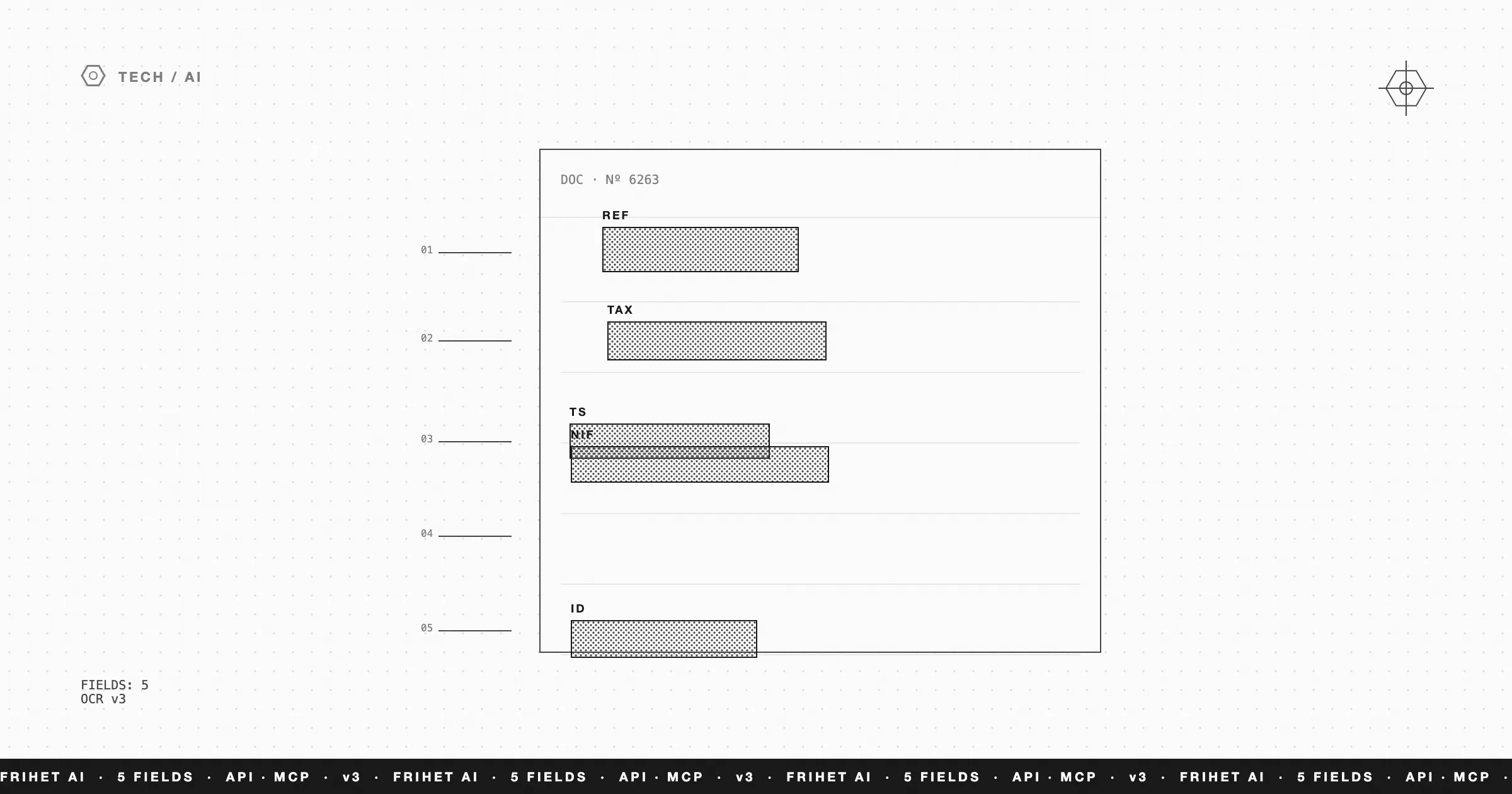
Optical character recognition has existed for decades. What has changed is accuracy. Traditional OCR read plain text with a notable margin of error. AI-powered OCR understands document structure: it can distinguish between the invoice number, the tax base, the VAT amount, and the total — regardless of format or language.
In practice, this transforms expense capture. You photograph a receipt with your phone, the system extracts all relevant data, assigns it to the correct categories, and creates the accounting entry. What used to take 2-3 minutes per receipt resolves in seconds.
Automatic categorization
Every expense belongs to a fiscal and accounting category. Fuel, office supplies, professional services, meals. Assigning these categories manually is tedious and error-prone, especially when you accumulate dozens of expenses each month.
AI learns from your patterns. After a few weeks of use, it knows that the recurring charge from your telecom provider goes to “Communications,” that your regular gas station is “Transport,” and that the restaurant near your client’s office is “Entertainment expenses.” The accuracy rate exceeds 95% on accounts with history.
Predictive cash flow alerts
This is probably the application with the greatest strategic impact. AI analyzes your income and expense patterns, your clients’ payment behavior, and your future commitments to project your cash flow for the coming weeks.
If it detects that in 15 days you could face a liquidity problem — because several supplier payments coincide with habitual delays from a large client — it warns you with enough time to act. You can accelerate a collection, negotiate a deadline, or adjust an expense. The difference between anticipating a problem and suffering it is often the difference between surviving and closing down.
Conversational copilot
The AI copilot is the most visible layer of artificial intelligence in a modern ERP. Instead of navigating through menus and filters to find a data point, you ask directly: “How much did I invoice in January,” “Who are my clients with invoices overdue by more than 30 days,” “What is my gross margin this quarter.”
The copilot responds in natural language, with real data extracted from your accounting. It does not make things up or hallucinate — it queries your database and presents the information clearly.
What AI does not do (and should not do)
It is just as important to know what AI can do as to understand its limits. In business management, AI should not:
- Make strategic decisions for you. It can give you data, projections, and alerts. The decision is yours.
- Replace your tax advisor. AI categorizes and detects anomalies. Tax planning, regulatory interpretation, and complex decisions require a professional.
- Operate without human oversight. Data should be reviewed periodically. AI gets it right in the vast majority of cases, but the business owner must maintain control.
The impact in real numbers
Implementation data from SMEs shows consistent results:
- Expense capture: from 3 minutes per receipt to under 10 seconds. For a freelancer with 40 monthly expenses, that is 2 hours recovered each month on this task alone.
- Categorization: 90% reduction in manual assignments, with an error rate below 5% compared to the usual 15-20% in manual processes.
- Bank reconciliation: from an entire morning to 15 minutes of review. Automatic suggestions match correctly on over 90% of transactions.
- Anomaly detection: duplicate invoices, unusual amounts, or out-of-pattern expenses are flagged automatically before they are consolidated in the accounting.
Adding all areas together, a typical SME with 2-5 employees recovers between 10 and 20 hours per month. For a solo freelancer, this can represent one or two full days each month previously spent on tasks that now resolve themselves.
How to start without overcomplicating things
The temptation when you discover these capabilities is to activate everything at once. It is better not to. Gradual adoption has two advantages: it lets you learn how each feature works, and it gives the system time to learn your patterns.
A reasonable plan:
- Week 1: activate smart OCR and start capturing expenses with your phone. It is the feature with the most immediate payoff.
- Week 2: review automatic categorizations and correct the ones that miss. Each correction improves the model.
- Week 3: enable cash flow alerts and observe the projections. Do not act on them yet — just get familiar with the format.
- Week 4: start using the copilot for quick queries. “How much have I spent on transport this month” is a good first prompt.
The time is now
AI in business management is no longer a promise. It is an available, proven, and accessible tool for any size of company. The question is not whether to adopt it, but how much longer you can afford not to while your competition already uses it.
Frihet integrates these capabilities natively: smart OCR, automatic categorization, predictive alerts, and a conversational copilot. Everything designed to work from day one, without complex configurations or steep learning curves. AI should not require a degree to use. It should simply work. And that is exactly what it does.
Was this article helpful?
FAQ
Can AI replace my tax advisor?
No, and that is not its goal. AI automates data capture, categorization, and anomaly detection. Your advisor remains essential for tax strategy and complex decisions.
Is it safe to trust financial data to AI?
Yes, as long as the provider complies with data protection regulations. Frihet processes data on Google Cloud infrastructure (EU-U.S. Data Privacy Framework certified) with end-to-end encryption and is fully GDPR compliant.
What level of AI does Frihet currently offer?
Frihet includes smart OCR for expenses, automatic transaction categorization, predictive cash flow alerts, and an AI copilot that answers questions about your financial data in natural language.